
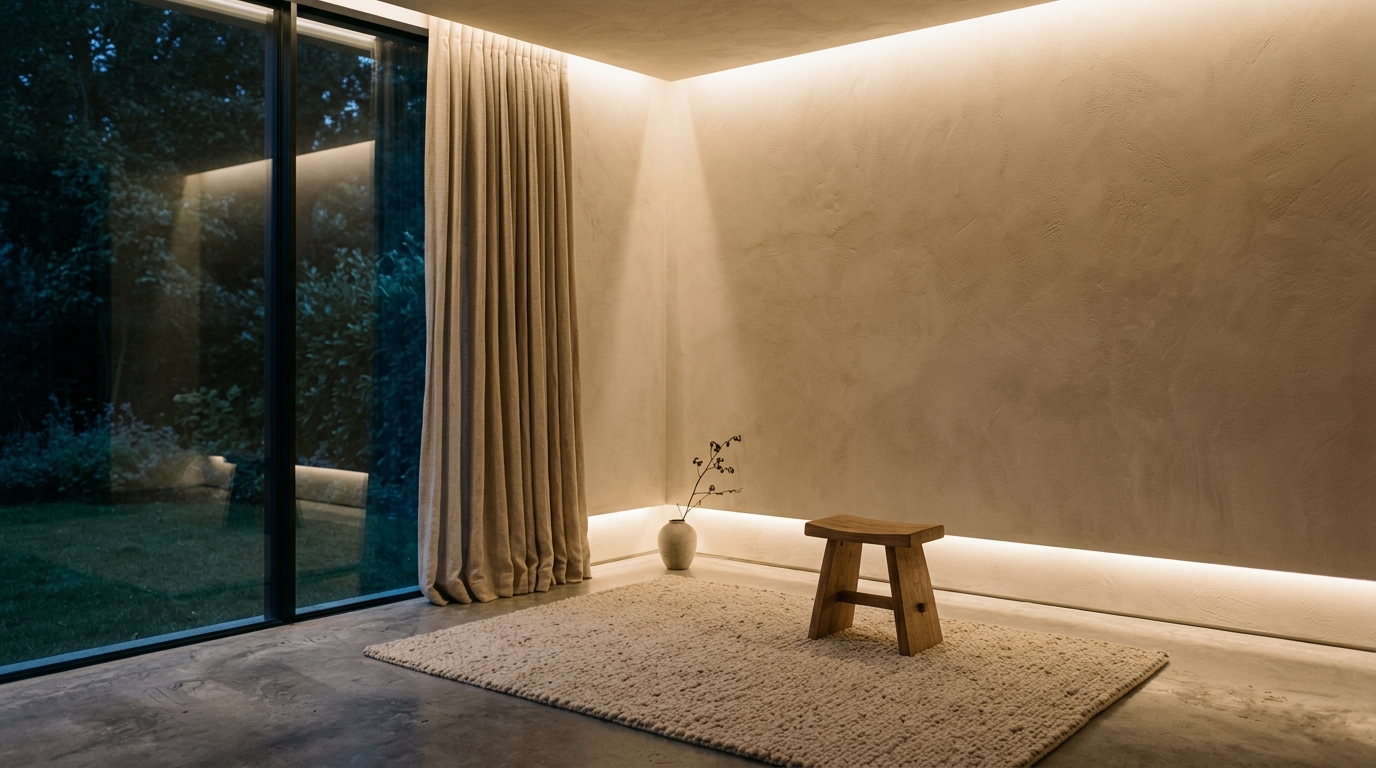
In an era defined by perpetual digital connectivity, non-stop algorithmic notifications, and ambient sensory overload, the rarest commodity in modern life is not material wealth—it is absolute silence. Yet, within high-end interior design and contemporary lifestyle philosophy, silence is routinely misunderstood as a mere negative space; a passive absence of noise.
In reality, true acoustic and visual stillness is an active, curated architectural element. To build a home that functions as a genuine sanctuary for the mind, stillness must be deliberately engineered into the physical framework and spatial layout of your living space.
1. The Sensory Reset: Minimalism as Neuro-Architecture
From a neurological perspective, your brain never truly stops processing your environment. Every extraneous object, conflicting color palette, exposed cable, and piece of unedited decor in a room demands microscopic amounts of subconscious cognitive processing power. In design philosophy, this phenomenon is recognized as “visual noise.”
When a living space is saturated with visual noise, the human nervous system remains trapped in a state of low-level, continuous alertness. The sympathetic nervous system stays subtly activated, mimicking a mild, chronic stress response that drains your mental energy without your conscious awareness.

Modern quiet luxury resolves this cognitive fatigue through the strict discipline of editing. Stripping a room back to its structural essentials is not an act of aesthetic deprivation; it is a calculated act of neurological preservation. By lowering the sensory load of your immediate surroundings, you create a clean environmental baseline. This baseline allows the brain’s default mode network (DMN) to engage, which is essential for deep processing, self-reflection, and genuine mental recovery.
The intentional reduction of environmental stimuli serves as a profound psychological reset button. When your eyes are no longer darting from one unresolved visual clutter point to another, your brain waves naturally shift from high-frequency beta states into calmer alpha patterns. To establish this foundational clarity throughout your home, reference our comprehensive strategy on Minimalist Workspace Optimization.
2. The Physics of Acoustic Clarity: Managing Spatial Resonance
Engineering physical stillness within a home requires a foundational understanding of internal acoustics and wave mechanics. Sound waves bounce aggressively off hard, unbroken, reflective surfaces. This creates micro-echoes and elongated reverberation times that make an environment feel frantic, hollow, and chaotic—even when no one is actively speaking. The hum of an air conditioner, the distant rumble of traffic, or the vibration of home appliances can become trapped in a poorly calibrated room.
To cultivate an authentic atmosphere of quiet luxury, structural design must utilize advanced material strategies to manage acoustic absorption and diffusion:
Decoupling and Structural Mass
True acoustic isolation begins behind the drywall. High-end architectural design utilizes staggered-stud framing walls or mass-loaded vinyl (MLV) layers inside the partitions to mechanically decouple the interior walls from the exterior structure. This prevents low-frequency structural vibrations from transferring into your living space.
High-Density Acoustic Textures
Once the shell is secure, the interior surfaces must be treated to absorb mid-to-high frequency airborne sounds. Incorporating natural, heavy-gauge textiles is highly effective. Floor-to-ceiling linen drapes with hidden acoustic linings, thick organic wool area rugs over dense felt padding, and deeply upholstered low-profile furniture act as structural dampeners. These soft, multi-layered surfaces trap ambient air vibrations within their fibers, preventing sound waves from ricocheting across the room.
Matte, Porous, and Varied Foundations
Solid, smooth, non-porous materials like polished steel, expansive glass sheets, and high-gloss lacquers are acoustically volatile. Balance these reflective elements by introducing porous, matte finishes. Raw travertine, micro-cement, multi-textured lime plaster walls, or integrated acoustic timber paneling with acoustic felt backing diffuse sound naturally. Rather than reflecting the sound wave cleanly back into the room, these materials break the wave apart, instantly softening the audio profile of the space.
By introducing architectural layers that actively swallow harsh frequencies, the ambient sound profile of a home shifts from sharp and echoic to soft, muted, and insulated. This structural muting creates an immediate, palpable sense of shelter the moment you step across the threshold.
3. The Cognitive Dividends of Environmental Stillness
When an interior space is structurally silenced, it immediately alters the behavioral patterns and cognitive performance of its occupants. Deep creative focus, complex logical analysis, and genuine emotional decompression cannot occur in environments saturated with ambient disruption. Anthropological studies in spatial design demonstrate that human communication becomes more intentional, deliberate, and calm when background acoustics are carefully controlled. In a quiet room, you do not need to speak loudly to be heard, which naturally lowers the emotional tension in a conversation.
Furthermore, reducing auditory and visual inputs provides a massive boost to working memory capacity. Without competing environmental data points fighting for your brain’s attention, your ability to achieve a “flow state” increases exponentially.
An intentionally quiet room serves as a protective psychological buffer against an overly accelerated, hyper-stimulated world. It provides the rare, unhurried space required to think clearly, breathe deeply, and reset the nervous system after prolonged exposure to the chaotic pacing of modern professional life. This structural transition from external chaos to internal stillness serves as the ultimate environmental companion to your established Evening Rituals for Intentional Decompression.
4. Constructing a Personal Sanctuary: The “Stillness Zone”
Achieving the architecture of silence does not necessitate an immediate, full-scale structural renovation of your entire home. Instead, this philosophy can be implemented systematically by curating a single, dedicated “Stillness Zone” within your existing floor plan—whether that means isolating a reading corner, an architectural window niche, or an entire study room.
- Step 1: Isolate a low-traffic zone or corner.
- Step 2: Remove all digital devices, chargers, and non-essential objects.
- Step 3: Introduce sound-dampening textures (wool, linen, plaster).
- Step 4: Layer warm, low-glare, indirect architectural lighting.
To establish this zone, apply a strict zero-tolerance policy toward unnecessary objects. Remove all visible digital charging apparatus, loose papers, smart speakers, and secondary decor items that do not possess absolute utility or profound personal meaning. If an object does not actively contribute to an atmosphere of calm, it is contributing to the noise.
Ensure the lighting scheme relies strictly on low-glare, warm, indirect architectural sources—such as floor-level LED wash strips or brass wall sconces—rather than harsh overhead ambient fixtures. Keep the color palette completely monochromatic or tonally tightly grouped using soft, warm neutrals like bone, oatmeal, or muted clay. Spend ten uninterrupted minutes in this calibrated space daily, completely disconnected from digital screens, and observe how rapidly your cognitive clarity returns when your physical environment stops competing for your attention.
Ultimate luxury is not defined by excess, opulence, or display; it is defined by complete control over your personal environment. By mastering the architecture of silence, you transform your home from a simple place of residence into a highly sophisticated asset engineered for mental longevity, creative clarity, and profound emotional restoration.

