
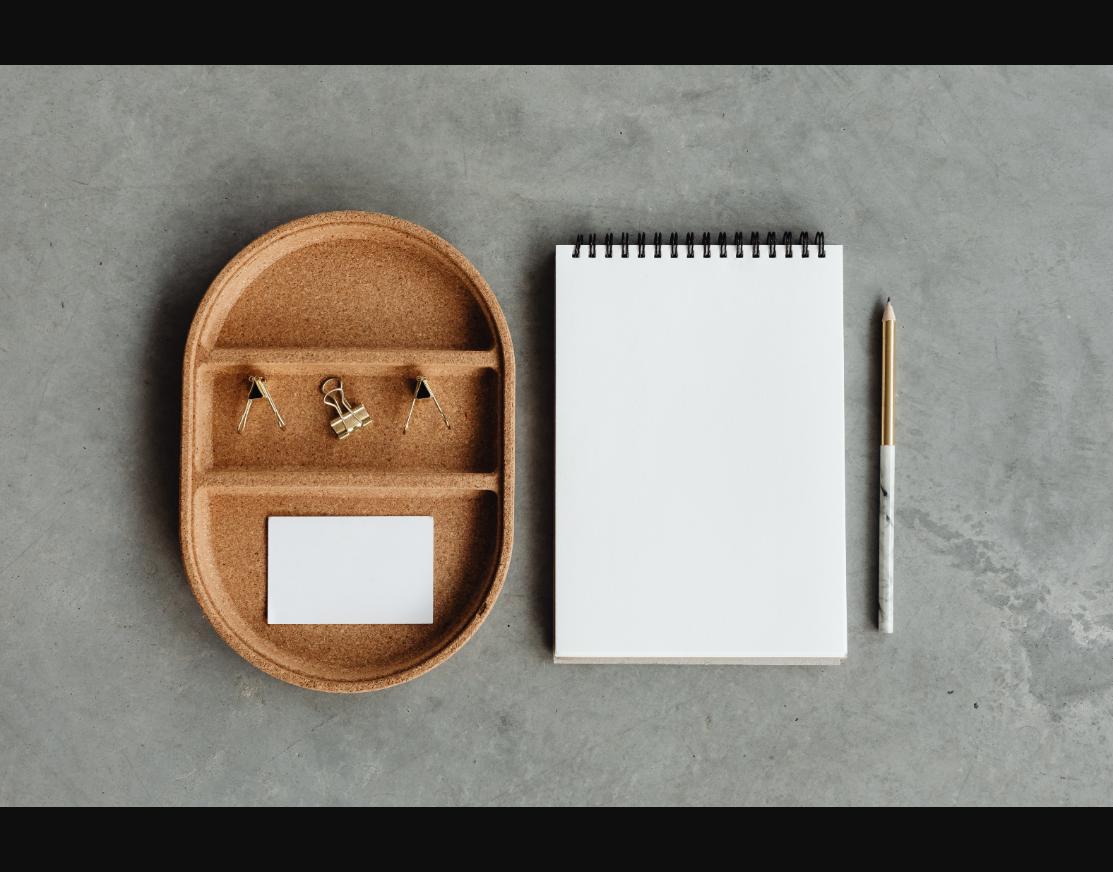
For the modern professional, creative, or writer, a desk is much more than a simple slab of wood where a computer sits. It is the physical manifestation of your mental landscape. Over my years spent designing functional home offices and analyzing personal productivity workflows, I have noticed a direct, undeniable link between environmental clutter and cognitive fatigue. When your workspace is crowded with neon plastic sticky notes, tangled cables, generic pens, and mismatched storage bins, your brain is constantly processing background visual noise. This micro-distraction chips away at your attention span, making it nearly impossible to access a state of deep, uninterrupted focus.
But a true minimalist workspace isn’t about working in a cold, empty box. It is about a philosophy I call “intentional curation”—removing the non-essential so that the tools remaining can truly shine in both function and form.
When you choose objects made from premium, natural materials that feel incredible to touch and look beautiful under soft lighting, your desk transforms into a destination. It becomes a sanctuary where you actually look forward to sitting down and doing your life’s best work. Here is my personal architectural layout guide to the 8 minimalist desk essentials I deploy to build high-performance, design-forward workspaces.
🌾 1. The Oversized Merino Wool Felt Desk Pad
If you are looking to instantly define your workspace and bring immediate structural order to a bare desk, an oversized desk mat is the single most effective piece of design real estate you can buy.
In my own workspace layouts, I avoid cheap synthetic leather or plastic mats completely. Instead, I always opt for a thick, heavy-gauge desk pad crafted from genuine merino wool felt in a soft grey, charcoal, or oatmeal tone. Wool felt introduces a soft, organic texture that contrasts beautifully against hard wood or glass desktop surfaces. Beyond the premium aesthetic, it serves two major functional purposes: it acts as a massive, seamless mousepad, and it dampens the acoustic echo of typing, giving your office a quiet, library-like atmosphere that encourages deep thought.
🪵 2. The Solid Wood Monitor Riser or Desk Shelf
Staring down at a laptop or a low-set monitor for eight hours a day is an absolute recipe for chronic neck strain and poor posture. However, balancing a premium screen on top of a stack of old textbooks ruins the visual flow of an intentional workspace.
A continuous, architectural desk shelf made from solid walnut or white oak is an absolute non-negotiable anchor for a modern setup. By raising your monitor to eye level, you immediately correct your posture. More importantly for minimalism, a desk shelf introduces a clever vertical layer of storage. It creates a clean, hidden garage space directly underneath your screen where you can slide your keyboard, trackpad, or closed laptop out of sight at the end of the workday, cleanly drawing a mental boundary between work time and rest time.
📐 3. The Matte Aluminum Solid Metal Pen Tray
Pens have an annoying habit of multiplying and migrating across a desk, rolling into corners and creating instant micro-clutter. A massive plastic pen organizer filled with dried-out promotional markers is the exact opposite of what we want.
To fix this, I strip everything down to a single, beautifully machined block of matte anodized aluminum or solid brass configured as a low-profile pen tray. When you limit your surface storage to a tray that holds only two or three premium writing instruments, you force yourself to maintain an edited setup. Placing a heavy metal tray on your wool pad creates a dedicated, permanent home for your tools. The weight and crisp, metallic edges look incredibly clean, sharp, and professional.
💡 4. The Architect-Style LED Desk Lamp with Stepless Dimming
Lighting can make or break your focus. Overhead fluorescent lighting or a harsh, uneven desk light causes severe eye strain and makes a home office feel clinical and exhausting.
When sourcing a desk lamp, I look for a minimalist matte-black or brushed-steel architectural arm lamp featuring a wide, diffused LED strip and stepless touch-dimming capabilities. The key to minimalist lighting is control; you want to project a clean pool of warm, glare-free light directly onto your documents and keyboard without illuminating the rest of the room. Setting the color temperature to a warm, soft hue mimicking natural afternoon light signals your nervous system to remain calm, focused, and free from environmental anxiety.
🔌 5. The Heavyweight Magnetic Cable Block
Nothing shatters the illusion of a clean, minimalist desktop faster than a chaotic waterfall of charging cables slipping behind the desk every time you unplug your devices. Crawling under a workspace to fish out a wire is a total friction point in a workday.
My favorite solution to this universal problem is a solid, weighted magnetic cable block. Crafted from premium materials like solid steel encased in soft matte silicone, these blocks sit heavily on your desk surface or monitor riser without needing sticky adhesives. Hidden internal magnets snap securely onto your metal charging cords, keeping your USB-C and lightning tips lined up in a neat, uniform row, perfectly ready for use whenever your devices dip in battery.
☕ 6. The Double-Walled Ceramic Tumbler
A half-empty ceramic mug with dry coffee stains sitting on a bare wood desk is a classic visual clutter trap. Furthermore, traditional mugs allow your beverages to go cold quickly, forcing you to constantly break your focus to walk to the kitchen for a reheat.
In my daily routine, I swap standard mugs for a sleek, lidless, double-walled ceramic or porcelain insulation tumbler. The double-walled construction keeps your tea or espresso hot for hours while keeping the exterior completely cool to the touch. Because it lacks a handle, it maintains a perfectly clean, cylindrical silhouette that looks like a miniature piece of modern pottery sitting on your felt desk pad.
📔 7. The Hardcover Dot-Grid Project Planner
While digital project managers and calendars are fantastic for scheduling, I have found that the tactile act of physically writing down your top three intentions for the day is unmatched for psychological clarity.
A premium hardcover dot-grid notebook bound in a muted, neutral bookcloth linen fabric is an essential cognitive tool. Sticking to a dot-grid layout rather than harsh lined paper allows for complete spatial freedom—you can fluidly pivot from writing out a structured daily checklist to sketching an architectural room layout or wireframe. Keeping this journal open next to your keyboard provides a constant, analogue reminder of your primary focus, keeping your mind firmly anchored away from the endless distraction of browser tabs.
🌿 8. The Matte Clay Pots for Micro Succulents
A purely corporate, sterile desk can feel dead and uninspiring. To breathe life into a minimalist workspace, you need to introduce an organic element, but large, sprawling houseplants can overwhelm a compact desk surface.
I recommend integrating a single, low-maintenance micro plant—such as a Zebra Haworthia succulent or a slow-growing air plant—housed in a raw, unglazed geometric clay pot. The earthy, terra-cotta or sand-colored matte finish of the clay container injects a grounding, organic texture into a world otherwise dominated by glass and aluminum screens. Looking at a small piece of natural greenery during short work breaks is a proven scientific method to lower cortisol levels and gently restore your visual attention.

