
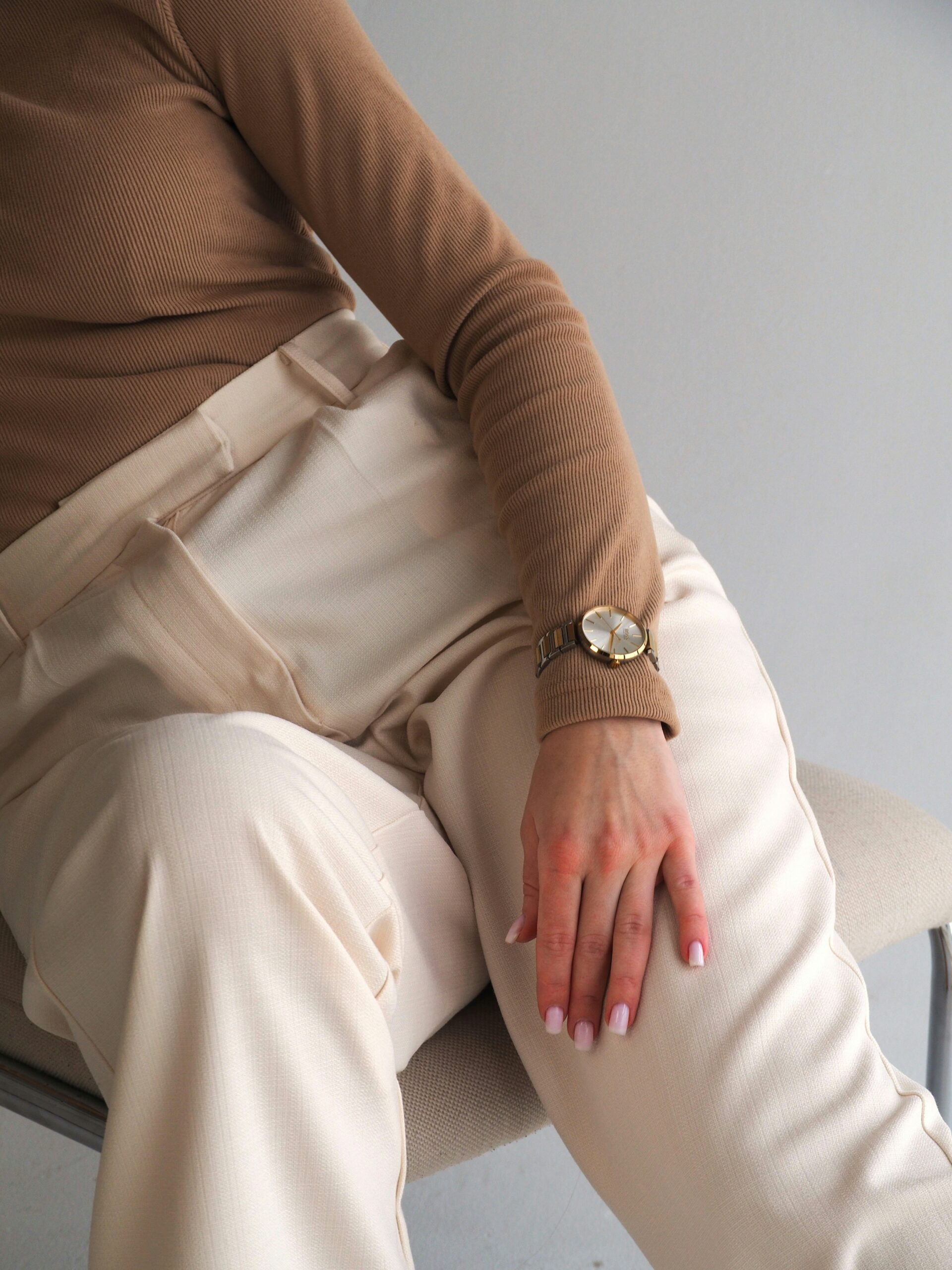

Linen trousers have a reputation problem: done cheaply, they look sloppy and shapeless by noon. Done well — the right fabric weight, real tailoring, the right styling — they’re one of the more genuinely elevated ways to dress for heat. Here’s what actually separates the two.
Fabric Quality Is a Real, Verifiable Thing Here
This isn’t just a style opinion — linen quality is something you can actually verify. Look for “Belgian Linen™” or “European Flax®” on a garment’s labeling; these are real, legally protected certifications (administered by the Belgian Flax & Linen Association and the European Confederation of Linen and Hemp, respectively), not marketing language. They guarantee the flax was grown in the specific coastal-Western-Europe climate — Belgium, the Netherlands, Northern France — long recognized for producing some of the highest-quality flax fiber, and in the case of “Belgian Linen™” specifically, that the fabric was also woven in a certified Belgian mill under audited quality standards. Heavier, long-staple flax fiber genuinely holds its shape and structure better over a day of wear than shorter-fiber, lower-grade linen — that’s a real fiber-length difference, not just a price difference.
Construction Details That Matter
Look for pieces with intentional pleating and a substantial waistband — details that hold their shape — rather than an elastic waist, which tends to read as more casual and less tailored. These construction choices are part of what separates trousers that hold a clean line from ones that go shapeless by mid-afternoon.
Styling for a Polished Look
Contrast the texture. Linen’s natural nubby texture pairs well against something smoother — a silk or fine cotton top — for a considered contrast rather than an all-rough-texture outfit.
Lean into earth tones. Sand, stone, olive, and other neutral earth tones tend to suit linen’s natural texture especially well. That’s a styling preference worth knowing, though — not a hard rule; bold colors in linen work fine for people who want that look, it’s simply a less common styling choice.
Keep footwear minimal. Simple leather sandals or loafers let the trousers be the statement piece rather than competing with a busier shoe.
About the Wrinkles
Linen wrinkles — that’s inherent to the fiber, not a flaw in how it was made or worn. Treating the wrinkling as part of the fabric’s natural character, rather than something to fight with constant ironing, is generally the more comfortable (and more accurate) way to wear it.
Bottom Line
The difference between linen trousers that look elevated and linen trousers that look like pajamas usually comes down to two verifiable things: real fiber quality (checkable via Belgian Linen™/European Flax® certification) and real tailoring construction (pleating, a substantial waistband). Get those two right, and the styling choices — texture contrast, earth tones, minimal shoes — are just refinements on a solid foundation.
Sources: Belgian Flax & Linen Association (Belgian Linen™ certification standards); European Confederation of Linen and Hemp (European Flax® certification).

[…] with an investment-grade tailored blazer. The blazer is doing the structural work here — see our full guide on what actually separates a good linen blazer from a cheap one, since fabric certification (not just price) is a real, checkable signal of […]
[…] more about being selective on which specific pieces are worth that consideration — our guides on linen quality certification and on which items are actually worth the investment cover this in more […]