
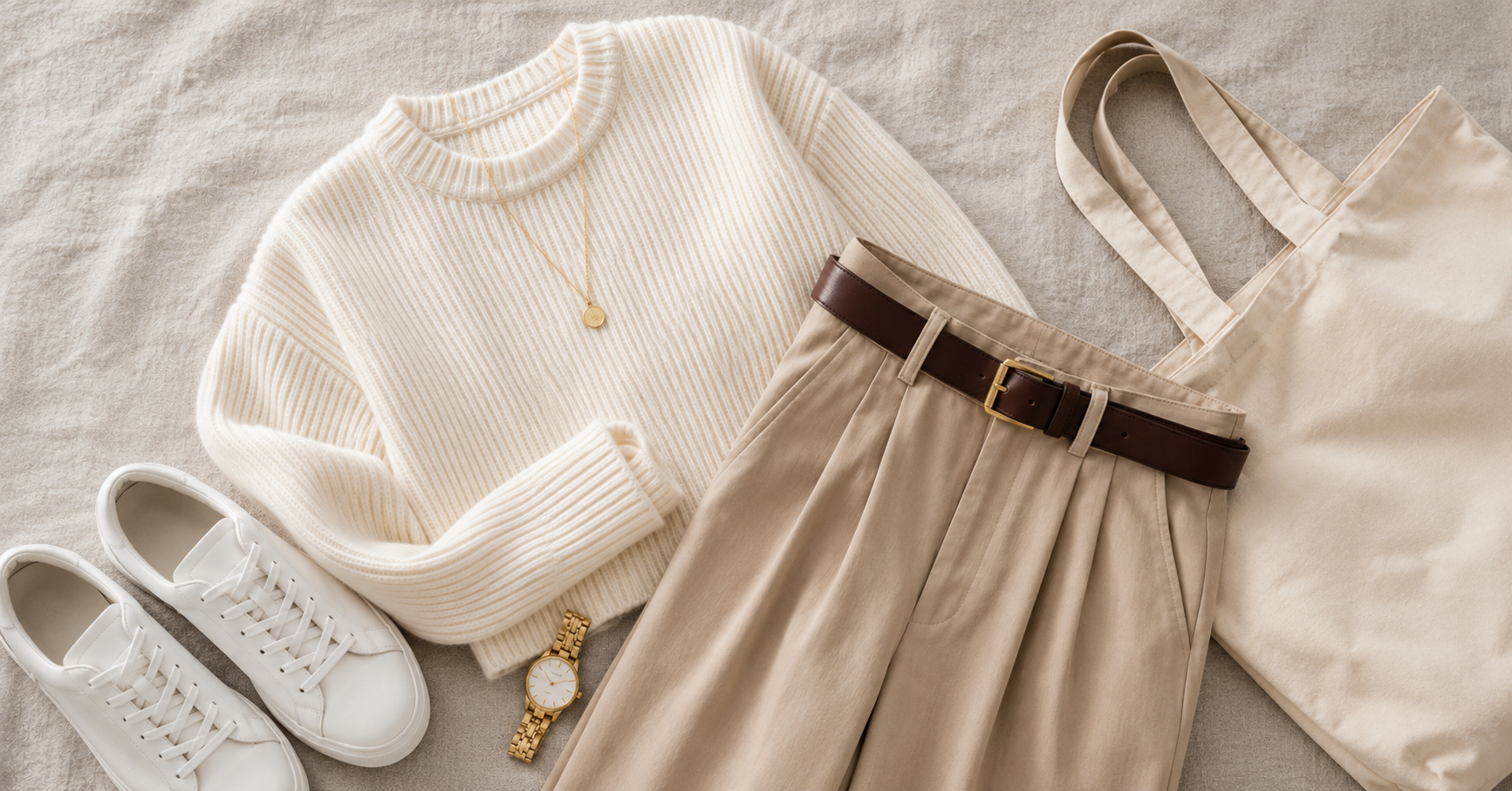

An expensive-looking outfit doesn’t require an expensive wardrobe — it requires knowing which items are actually worth spending on and which ones genuinely don’t matter. Here’s six pairings that put the budget where it counts.
Where to Actually Spend: Structure and Drape
The pieces worth real investment are the ones where fabric weight and construction are visible at a glance — a blazer that holds its shoulder line, trousers that drape rather than cling. A cheap version of these specific items tends to look cheap in a way a basic tee or tank simply doesn’t.
The Pairings
A budget ribbed tank, paired with an investment-grade tailored blazer. The blazer is doing the structural work here — see our full guide on what actually separates a good linen blazer from a cheap one, since fabric certification (not just price) is a real, checkable signal of quality.
A basic poplin shirt, paired with wide-leg trousers with real drape. Trouser fabric weight is the tell here — a stiff, thin fabric won’t move the way a heavier weave does, regardless of how clean the cut is.
Budget sunglasses, paired with one investment leather tote. Sunglasses are genuinely hard to judge quality on at a glance; a bag’s leather and hardware are not — spend where the difference is actually visible.
A basic cotton tee, paired with well-tailored trousers. The trousers carry the whole look; the tee is deliberately plain so it doesn’t compete.
Budget flats, paired with a structured coat. Outerwear is seen (and judged) more than footwear in most everyday situations — worth weighting the budget accordingly.
A basic belt, paired with an investment watch or one substantial piece of jewelry. One considered accessory reads as more intentional than several budget ones layered together.
The Actual Principle
The “high” items across all six pairings share something specific: they’re the pieces where construction quality is visible without close inspection — structure, drape, hardware. The “low” items are the ones where a budget version genuinely looks the same as an expensive one to anyone but the wearer. Spend according to that distinction, not according to which category of item generally costs more.
Bottom Line
A considered wardrobe on a budget isn’t about cutting corners everywhere evenly — it’s about being deliberate regarding which specific items actually show their price point and which ones don’t.
