
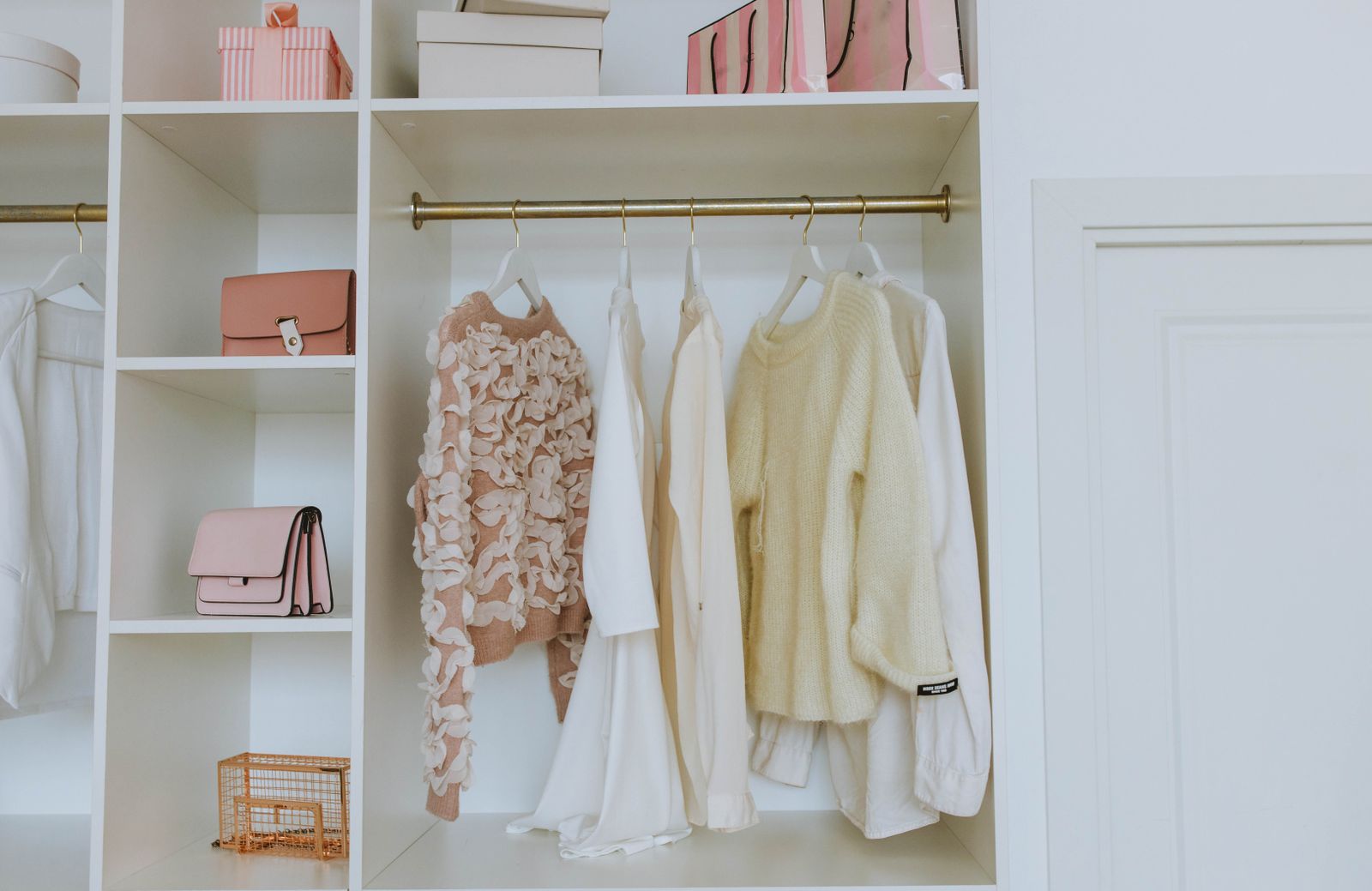
Having a limited wardrobe footprint is one of the most common structural hurdles in modern homes. When your storage is cramped, getting dressed in the morning stops feeling like an acts of personal styling and starts feeling like an exercises in frustration. It is incredibly easy for a small space to descend into a chaotic sea of tangled hangers, hidden shoes, and wrinkled fabric.
But a beautiful wardrobe isn’t dependent on having a massive, walk-in dressing room. True spatial flow is entirely about editing and maximizing your vertical real estate. Achieving flawless small closet organization requires moving away from temporary plastic storage containers and embracing strategic layout rules. By treating your closet like a high-end boutique, you can create an organized, clutter-free sanctuary that makes your daily editing effortless. Here are the five designer rules to transform your limited closet space today.

🪡 1. Uniformity is the Foundation (The Single Hanger Rule)
The absolute fastest way to reduce visual clutter in a tight wardrobe is to immediately replace mismatched plastic, wire, and wooden hangers. When your hangers are different shapes, heights, and colors, your clothes sit unevenly. This creates massive visual static that tricks your brain into seeing chaos, even if your clothes are perfectly clean.
- The Strategy: Invest in a single set of slim, non-slip velvet hangers in a solid neutral shade like ivory, slate gray, or black.
- The Benefit: Velvet hangers take up less than half the physical width of standard plastic options, instantly liberating inches of hanging bar space. Because every garment sits at the exact same vertical plane, your sightlines stay completely clean and streamlined.
📐 2. Exploit Your Hidden Vertical Height
Most standard closets feature a single hanging rod with a massive, underutilized dead zone stretching down to the floor or climbing up to the ceiling. To maximize a small footprint, you must claim every inch of this vertical real estate.
- Go Low: Introduce a low-profile, stackable wooden shoe rack at the base of your closet floor to keep footwear beautifully lined up instead of piled in a dark corner.
- Go High: Use the highest top shelf for sleek, matching canvas storage bins. Label them clearly and use them to house off-season garments, extra linens, or travel gear that you don’t need to access on a daily basis.
🎨 3. Group by Silhouette, Then Categorize by Tone
Organizing your clothing at random makes it incredibly difficult to find pieces quickly, leading to messy rummaging. Premium boutique spaces rely on a strict structural sorting formula.
- Step One: Group your clothing items strictly by their silhouette length. Hang all long coats and maxi dresses together on one side, moving gradually down to blazers, button-downs, and delicate camisoles. This leaves open floor space directly underneath your shorter items for additional storage drawers.
- Step Two: Once grouped by shape, sort them within their categories from light to dark. This tone-on-tone progression turns your wardrobe into an intentional visual gradient that feels deeply therapeutic to look at.
🧠 The “One In, One Out” Wardrobe Curation Rule
When dealing with structural space limitations, physical boundaries are your best friend. To prevent your newly organized system from slowly overflowing, adopt the One In, One Out Rule:
For every single new piece of clothing, footwear, or accessory you introduce to your wardrobe, one older item must be intentionally removed through donation, resale, or recycling.
This mental boundary forces you to stop and carefully evaluate every single purchase. It shifts your consumer habit from impulsive shopping to intentional curation, ensuring your capsule wardrobe stays tightly edited, highly functional, and completely stress-free.

