
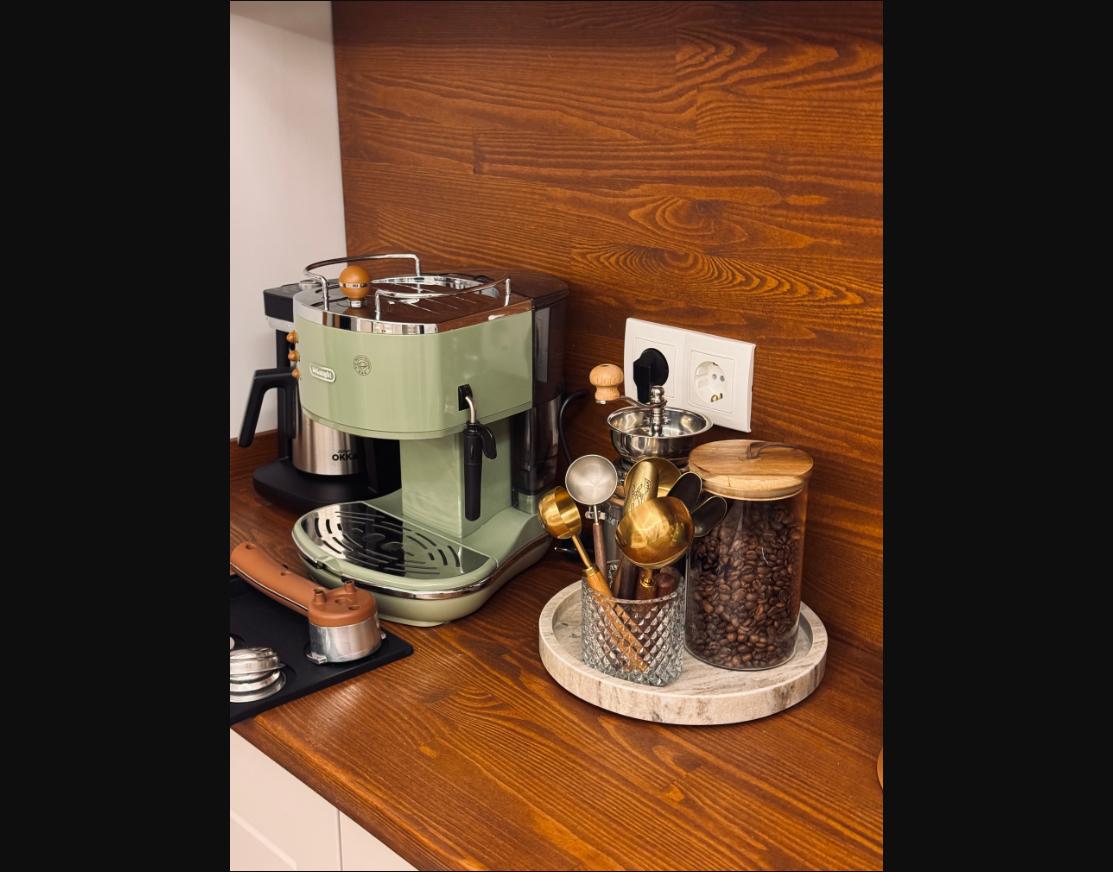
The modern morning has become a masterclass in sensory overstimulation. Before our eyes are even fully open, we are greeted by the aggressive glare of smartphone screens, a barrage of work notifications, and a relentless influx of digital noise. In an attempt to combat this early-morning fatigue, many have built dedicated coffee stations in their kitchens. However, the typical home espresso setup quickly turns into its own source of visual stress. We see bright, commercially branded coffee bags clipped shut, mismatched ceramic mugs collected from various vacations, exposed power cords snaking across countertops, and an absolute mountain of plastic pods. What should be a peaceful, meditative transition into the day becomes a chaotic extension of the kitchen workspace.
To rescue the morning from this state of aesthetic disorder, the global design elite are turning to a highly curated spatial concept: the minimalist cafe corner.
If you browse casual home decor forums for advice, you will find the same uninspired, farmhouse-style suggestions. Writers will tell you to hang a rustic wooden sign that reads “Coffee Bar,” stack paper cups in cheap wire baskets, or display an array of neon-labeled syrup pumps on a spinning lazy Susan. This hyper-commercial, high-contrast approach completely destroys the tranquil, quiet luxury potential of the space.
An authentic, elevated cafe nook does not mimic a bustling, loud commercial coffee shop; it evokes the serene, architectural calm of a luxury boutique hotel or a hidden Japanese tea house. It relies on seamless concealment, monolithic stone surfaces, tactile ceramic uniformity, and deliberate sensory restraint. Here is your definitive architectural guide to mastering this daily sanctuary.

📐 1. Spatial Selection: Defining the Monolithic Nook
The first step in establishing a premium minimalist cafe corner is separating the beverage ritual from the primary cooking zone. Placing your coffee gear directly next to the sink, the toaster, or the food-prep area invites functional cross-contamination and visual clutter.
Look for a distinct, self-contained architectural pocket within or just outside the kitchen perimeter. This could be an unused alcove, a transitional butler’s pantry, or a floating console area at the edge of the dining room pavilion. Once the zone is selected, establish a monolithic foundation. Avoid standard laminate countertops; instead, specify a single, thick, seamless slab of honed natural stone—such as a deep, dramatic Nero Marquina marble, a soft gray Pietra Cardosa sandstone, or a matte, earthy travertine. Reining in the material palette to a single, continuous stone block instantly elevates the station, signaling to the brain that this space is an intentional destination dedicated entirely to a singular, calming ritual.
🎛️ 2. The Appliance Edit: Sculptural Machinery and Hidden Cord Geometry
The centerpiece of any coffee corner is the machinery. However, mainstream appliance design is often loud, featuring bright digital flashing lights, excessive chrome trim, and an abundance of plastic switches that scream for attention.
For an ultra-premium aesthetic, treat your brewing equipment as functional sculpture. Select a high-end, manual or semi-automatic espresso machine characterized by clean lines, matte finishes, and tactile analogue levers—such as a customized La Marzocco Linea Micra or a minimalist lever machine in satin black or brushed stainless steel. Pair it with a single-dose grinder that features an understated, geometric silhouette. The golden rule of minimalist styling applies stringently here: zero visible cords. Work with an electrician to route all power cables directly down through a precision-drilled grommet in the stone countertop, concealing them entirely within the lower cabinetry. If a machine cannot be elegantly displayed, it should be integrated into a pocket-door appliance garage that smoothly slides completely out of sight when the ritual is concluded.
🏺 3. Tactile Uniformity: Crafting a Curated Ceramic Hierarchy
Nothing fractures the visual serenity of a coffee corner faster than a chaotic collection of mismatched mugs. Opening a cabinet to find a jigsaw puzzle of different shapes, sizes, colors, and corporate logos introduces immediate mental friction.
To cultivate a true luxury cafe experience at home, implement absolute material uniformity within your drinkware. Banish mass-produced, glossy porcelain mugs entirely. Instead, invest in a highly edited, hand-crafted capsule collection from an independent ceramic artisan. Opt for raw, unglazed exterior stoneware or matte, chalky ceramic finishes in a tight, monochromatic color spectrum—such as un-dyed clay, soft charcoal, or deep sand. Select precisely two sizes: a compact, thick-walled demitasse for espresso, and a perfectly proportioned, low-profile tumblers for pour-overs or flat whites. When your cups are neatly stacked or aligned on a floating shelf, their matching textures and organic forms create a rhythmic, museum-like display that feels incredibly intentional and soothing to the touch.
🧳 4. Consuming the Brand: The Art of Hidden Subservience
Commercial packaging is explicitly engineered to scream for attention on supermarket shelves. The bright colors, bold typography, and metallic foils of coffee bags are designed to disrupt your vision—meaning they are the absolute antithesis of a quiet luxury home environment.
To maintain an un-distracted, high-aesthetic environment, all consumables must undergo a strict process of decanting and hidden subservience. Never leave a retail coffee bag sitting on the countertop. Instead, decant your whole beans into uniform, airtight vacuum canisters crafted from matte black stainless steel or dark smoked glass topped with walnut lids. If you use a capsule system, store the pods entirely out of sight inside a shallow, velvet-lined drawer insert beneath the counter. Sugar, cinnamon, and organic sweeteners should reside in matching matte ceramic pinch bowls with tiny, hand-carved wooden spoons. By stripping away corporate branding and commercial logos, you allow the raw, natural beauty of the coffee beans and the elegant textures of your preparation tools to take center stage.
🕯️ 5. Atmospheric Alchemy: Low-Level Luminescence and Olfactory Curation
The final layer of a minimalist cafe corner transcends pure visual layout; it addresses the deeper sensory landscape of the morning. The harsh, aggressive glare of standard overhead kitchen downlights can completely shock a waking mind, instantly shattering the delicate tranquility of a slow morning.
The lighting scheme for your morning sanctuary must be soft, indirect, and deeply atmospheric. Avoid overhead ceiling lights entirely during this hour. Instead, introduce a single, low-profile minimalist table lamp or a small architectural sconce directly on or above the stone surface. Select a fixture with an opal glass or solid brass dome diffuser that casts light exclusively downward, and equip it with a warm, dimmable LED bulb set to a soft 2200K to 2500K glow. This creates a gentle, candle-like pool of illumination that softly spotlights the brewing process while leaving the rest of the room in a calm, dark restfulness. Complement this visual warmth by curating the acoustic and olfactory environment: play a soft, ambient acoustic track on a hidden, fabric-wrapped speaker, and let the rich, authentic aroma of freshly ground espresso serve as the only fragrance in the space.
💡 The Architecture of Calm: My Final Styling Note
The true value of a Minimalist Cafe Corner is not found in the luxury price tag of the espresso machine or the rarity of the stone countertop; it is found in the boundaries you establish for your mental well-being. When you dedicate a specific, beautifully edited corner of your home to the simple act of preparing your morning beverage, you create a physical buffer zone against the chaos of the outside world. Preparing your drink ceases to be an automated, rushed chore to get a jolt of energy; it becomes a slow, tactile, and deeply satisfying art form. As you watch the rich espresso drop into a perfectly weighted ceramic cup under a warm, gentle light, you are completely present. You step into your day not with a sense of frantic urgency, but wrapped in an enduring luxury of absolute internal calm.

