
Kitchen Organization Setup: Mastering the Luxury “Micro-Pantry” Shift

For decades, the ultimate metric of a luxury kitchen was sheer scale. The suburban design boom convinced us that the ideal home required an expansive, walk-in pantry roughly the size of a small bedroom. These massive spaces were marketed as the peak of domestic convenience. However, in reality, they quickly degenerated into architectural dead zones. Hidden behind closed doors, these deep shelves became a chaotic dumping ground for expired canned goods, duplicate boxes of processed snacks, and forgotten small appliances. Instead of simplifying our lives, they promoted mindless over-purchasing and chronic visual noise. The traditional large pantry didn’t solve our storage issues; it merely obscured our clutter.

In 2026, the global design narrative has shifted decisively toward mindful containment, visual editing, and spatial efficiency. The design elite are abandoning sprawling pantries in favor of a sleek kitchen organization setup known as the “Micro-Pantry.”

When amateur lifestyle blogs attempt to cover kitchen storage, they tend to focus on superficial hacks. They will tell you to buy cheap plastic baskets from a dollar store or stick colorful, handwritten labels on everything. This reactionary approach completely misses the architectural elegance of the movement.

The Micro-Pantry shift is not about cramming your life into a smaller cabinet; it is a philosophy of radical curation. It demands that your ingredients be treated with the same aesthetic respect as fine art, utilizing premium amber glass, tailored fluted millwork, and seamless stone shelving. Here is your definitive architectural guide to executing this high-aesthetic transition in your home.

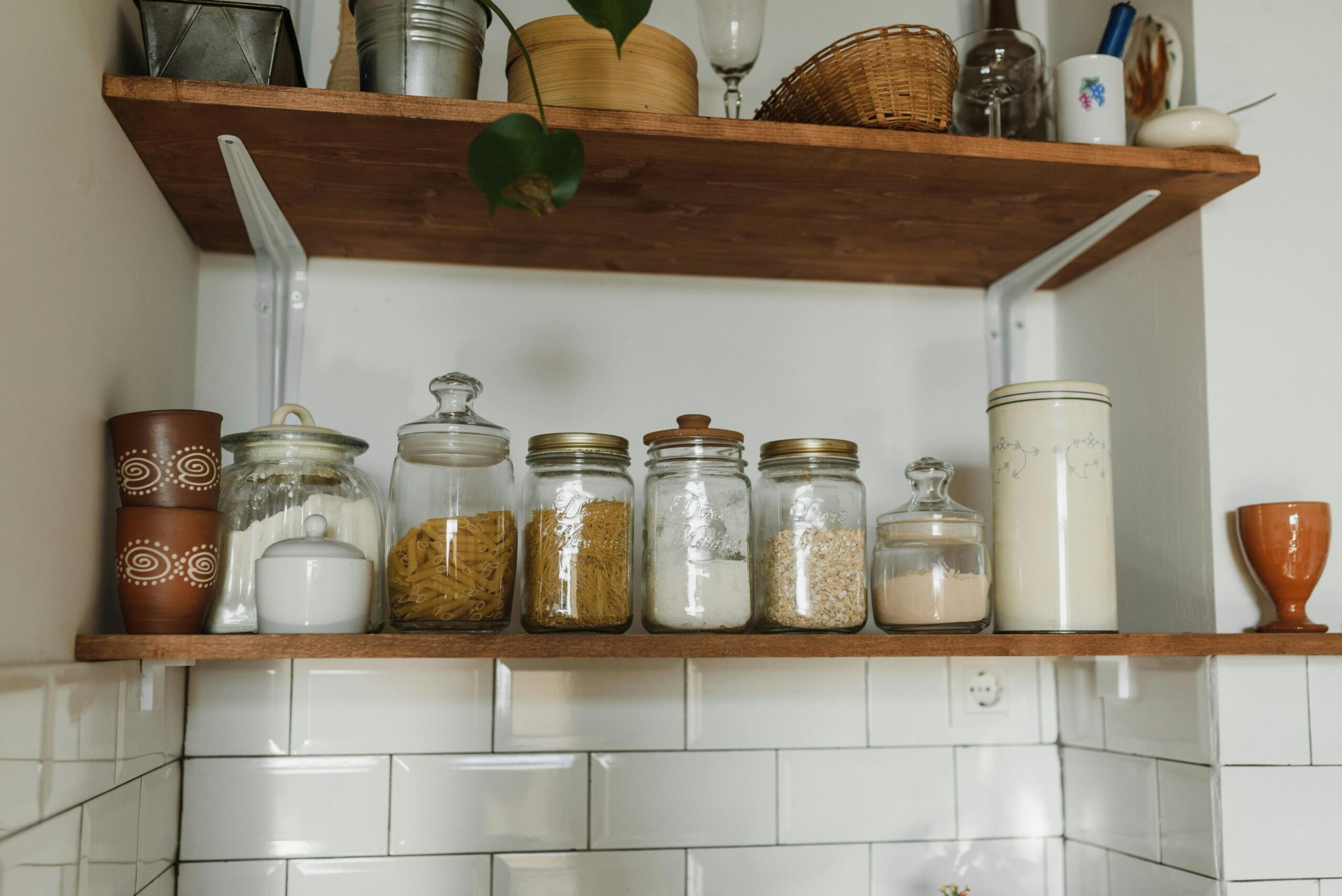
minimalist micro pantry setup with glass bamboo jars and woven baskets

📐 1. The Philosophy of Curation: Editing to the Essentials

The foundational rule of a high-aesthetic micro-pantry is simple: if you do not use it, look at it, or love it weekly, it does not belong in the primary kitchen zone. The traditional habit of storing a six-month supply of bulk goods directly next to your cooking range must be permanently broken.

To establish your new kitchen organization setup, implement a two-tier storage system. Transition bulk overstock, backup ingredients, and rarely used seasonal items to a secondary, out-of-sight location—such as a basement shelf or a utility closet. Your primary kitchen micro-pantry should be strictly reserved for a highly edited, one-to-two-week supply of daily essentials. By shrinking the physical volume of your active inventory, you instantly eliminate the cluttered visual noise that suffocates modern kitchens, clearing the path for an elegant, spacious canvas.

🏺 2. Material Uniformity: The Art of the Premium Decant

The greatest enemy of an elevated aesthetic is commercial packaging. Bright, mismatched cardboard boxes, crinkled plastic bags, and aggressive brand logos create a chaotic tapestry that destroys any sense of architectural calm. The micro-pantry solves this through absolute material uniformity.

Banish cheap, clear acrylic storage bins entirely; they scratch easily, yellow over time, and look distinctly synthetic. Instead, commit to premium glass and ceramic vessels. Specify heavy-weight, uniform borosilicate glass jars topped with hand-turned walnut or dark stained oak lids featuring airtight silicone seals. For items sensitive to light, such as premium olive oils, heritage grains, or loose-leaf teas, utilize matte black ceramic canisters or deep amber glass bottles. When an entire shelf consists of perfectly matched, high-quality materials, the ingredients themselves—the rich textures of wild rice, the pale dust of French flour, the deep tones of coffee beans—become beautiful design accents.

🪵 3. Architectural Integration: Fluted Millwork and Hidden Pockets

A micro-pantry should never look like an afterthought or an isolated organizing project. To achieve true quiet luxury, the storage architecture must be seamlessly woven into the structural fabric of your kitchen cabinetry.

Designers are heavily favoring two distinct architectural executions for 2026. The first is the “Appliance and Pantry Garage,” built directly into the countertop run. This setup utilizes pocket doors that smoothly slide back into the cabinetry walls, revealing a beautifully lit, stone-lined micro-pantry during cooking hours, and completely concealing it behind seamless wood panels when entertaining. The second approach involves deep, pull-out larder towers hidden behind sophisticated fluted wood cladding. When closed, the pantry looks like a solid, architectural accent wall; when touched, it glides open to reveal clean, powder-coated steel or solid walnut drawers engineered to hold decanted jars with absolute stability.

🗿 4. Geological Foundations: Lining Shelves with Luxury Stone

A massive oversight in standard cabinet design is the use of flimsy, white laminate or basic veneered particle-board shelving. Over time, these surfaces scratch, stain from oil spills, and sag under the weight of heavy jars, instantly cheapening the look of your kitchen.

In a premium micro-pantry setup, the interior shelving should be treated with the same structural gravity as your primary countertops. Line the backs and shelves of your pantry niches with solid slabs of honed natural stone, such as warm Taj Mahal quartzite, soapstone, or matte travertine. Running the stone continuously from the kitchen backsplash into the interior of the pantry cupboard creates an incredible sense of spatial luxury and visual continuity. Stone shelves are practically indestructible, effortlessly resisting oils and vinegar spills, while adding an undeniable weight and tactile permanence to the simple act of reaching for an ingredient.

🕯️ 5. Museum-Quality Illumination: Hidden Low-Temperature LED Channels

The reason most traditional pantries look uninviting is their harsh, uniform overhead lighting. A single bright bulb on the ceiling casts deep shadows across the shelves, making it impossible to see items clearly and flattening the visual depth of the space.

The lighting plan for a high-aesthetic kitchen organization setup must resemble that of a luxury jewelry boutique or a modern art gallery. Completely eliminate open, exposed light sources. Instead, route vertical, dimmable LED light ribbons into recessed channels directly behind the front lip of each cabinet frame or shelf edge. Specify a warm, ambient color temperature of 2700K. This indirect positioning ensures that the light washes backward across your decanted glass jars, beautifully illuminating the contents from within and casting soft, romantic glows that elevate the pantry from a mere storage box into a cinematic focal point.

💡 The Soul of Editing: My Final Curation Note

The true victory of the Micro-Pantry shift is its profound impact on your daily lifestyle. When you rid your kitchen of hoarding culture and ground your storage in rich timbers, natural stone, and uniform glass, you change your relationship with food and cooking. Preparing a meal ceases to be a chaotic search through crowded wire racks; it becomes a calm, tactile, and deeply satisfying ritual. You move through the space with absolute ease, surrounded by surfaces that feel clean, intentional, and masterfully composed. Let go of the unnecessary excess, embrace the elegant art of the micro-pantry, and wrap your home in the enduring luxury of perfect spatial editing.

IdeaHaul
IdeaHaul
Articles: 40

Leave a Reply

Your email address will not be published. Required fields are marked *