
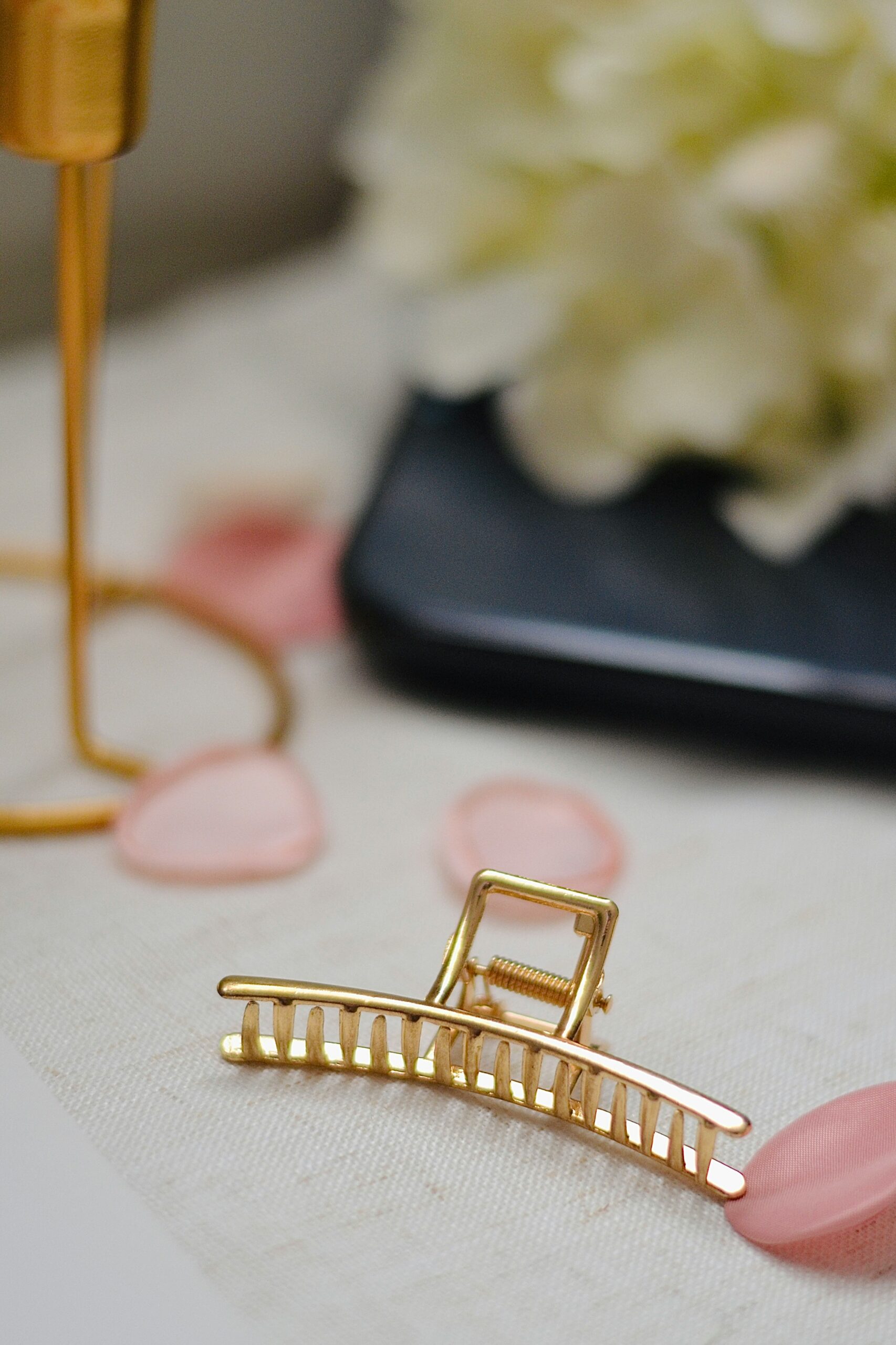
There is a distinct visual poetry to early summer styling that relies entirely on ease. As the air warms and the days stretch out, our relationship with our grooming routines undergoes a necessary shift toward minimalism. The heavy blowouts, stiff hairsprays, and aggressive heat-styling tools of spring begin to feel incredibly burdensome. In their place, we crave a look that honors the natural texture of our hair while lifting it cleanly away from the neck—allowing the summer breeze to provide instant cooling relief.
The ultimate expression of this sun-drenched, effortless sophistication is found not in complicated braids or elastic ties, but in the architectural grace of a single French hair pin.
If you browse mainstream beauty publications, the French pin up-do is often treated as a finicky, intimidating technique reserved exclusively for professional stylists. Standard roundups frequently suggest drowning your hair in sticky texturizing sprays, pinning it with dozens of hidden bobby pins, or buying cheap plastic hair forks that snap under pressure. This chaotic approach completely misunderstands the mechanics of the tool.
When you learn how to style a French pin properly, you realize it relies entirely on structural physics, balance, and the natural friction of your hair. By mastering the simple choreography of the twist-and-flip, you can construct a secure, headache-free up-do that lasts all day, transitioning seamlessly from a morning garden walk to an outdoor evening dinner. Here is your definitive designer’s blueprint to mastering this classic summer silhouette.
🏷️ 1. The Anatomy of the Tool: Selecting Material Integrity
Before you can style an effortless up-do, you must choose a tool that respects the weight and health of your hair. Mass-produced plastic clips or cheap metallic hair forks with sharp, unpolished edges are an absolute nightmare—they slice through hair cuticles, snag fine strands, and cause immediate breakage.
To elevate your daily grooming landscape, invest in a premium French pin—often called a hair fork or a chignon pin—crafted from high-end, smooth materials. Look for pins hand-carved from solid sustainable hardwoods like American walnut or black ebony, or opt for heavy, hand-polished brass or cellulose acetate with smooth, rounded tips. A high-quality French pin should have a slight, ergonomic curvature that matches the natural contour of your scalp. This structural curve distributes the weight of your hair evenly across your head, eliminating the focal pulling and tension headaches caused by tight elastic hair bands.
🧴 2. Prep the Canvas: Embracing Natural Daytime Texture
The greatest mistake people make when attempting to style a French pin up-do is working on freshly washed, silkily smooth hair. Without natural grit, a premium wood or metal pin will simply slide right out of your strands, forcing you to constantly readjust it throughout the day.
The ideal canvas for a French pin is day-two or day-three hair, which contains natural oils that provide necessary friction. If your hair is clean or naturally very fine, prep your strands by misting a light, coastal sea salt spray or a gentle, non-aerosol dry shampoo through your roots and mid-lengths. Work the product in with your fingertips to build a soft, airy volume. Avoid heavy silicone serums or weighing oils; you want the hair to feel light, touchable, and full of natural movement before you begin your structural twist.
🔄 3. The Choreography of the Twist: Gathering and Securing
The secret to a flawlessly secure French pin up-do lives entirely within the direction of your movement. It is a simple three-step ritual of gathering, twisting, and locking that requires absolutely no mirrors or extra tools.
First, gather all your hair at the nape of your neck into a low, clean ponytail using your hands. Begin twisting the ponytail firmly in a clockwise direction, lifting the twist upward against the back of your head as you turn. Continue twisting until the length of your hair forms a clean, vertical column against your scalp, allowing the remaining ends to cascade loosely over the top or tucking them neatly underneath for a smoother look. Hold this vertical twist securely against your head with your non-dominant hand.
🔀 4. The Architecture of the Lock: Inverting the Pin
Now comes the crucial moment of physics that guarantees an all-day hold. Pick up your French pin with your dominant hand, holding it so the prongs point upward and the curve of the pin arches away from your head.
Insert the tips of the prongs into the very top layer of your vertical hair twist, capturing a small section of hair from the outer edge. Push the pin about half an inch into the twist. Next, execute the magic flip: rotate the pin 180 degrees downward so the prongs are now pointing toward the nape of your neck, and the curve of the pin hugs the shape of your scalp. Finally, push the pin firmly downward through the center of the vertical twist, sliding it flush against your scalp underneath the bulk of your hair. This inverted motion locks the twist tightly against the anchor hair on your head, utilizing tension to create a rock-solid hold without a single pinch.
🌿 5. The Artful Dishevel: Framing the Silhouette
A perfect French pin style should never look clinical, tight, or overly manicured. The true charm of slow-living beauty is the illusion that your hair was thrown up in a matter of seconds, carrying an air of casual, poetic nonchalance.
Once your pin is locked into place, gently use your fingertips to massage your scalp at the crown to loosen the grip slightly, creating a soft, face-flattering volume. Gently tug a few loose, wispy strands free around your temples, the tops of your ears, and the nape of your neck. If you have natural waves or curls, let them spring forward freely to frame your face. This deliberate softening softens the sharp geometric lines of the up-do, turning your hairstyle into an organic extension of your personal style rather than a rigid presentation.
💡 Effortless Poise: My Final Styling Note
The beauty of styling a French pin is that it celebrates the natural evolution of your day. If a few strands fall loose while you are running errands or sitting on the beach, do not stress. Simply slide the pin out, give your hair a quick shake, and spend five seconds re-twisting it into place. There is an immense, quiet confidence that comes from moving away from chemical hairsprays and plastic clutter, relying instead on a single beautifully crafted heirloom object to carry you through the summer. Let your hair be free, trust the physics of the pin, and step out into the sun with absolute ease.

