
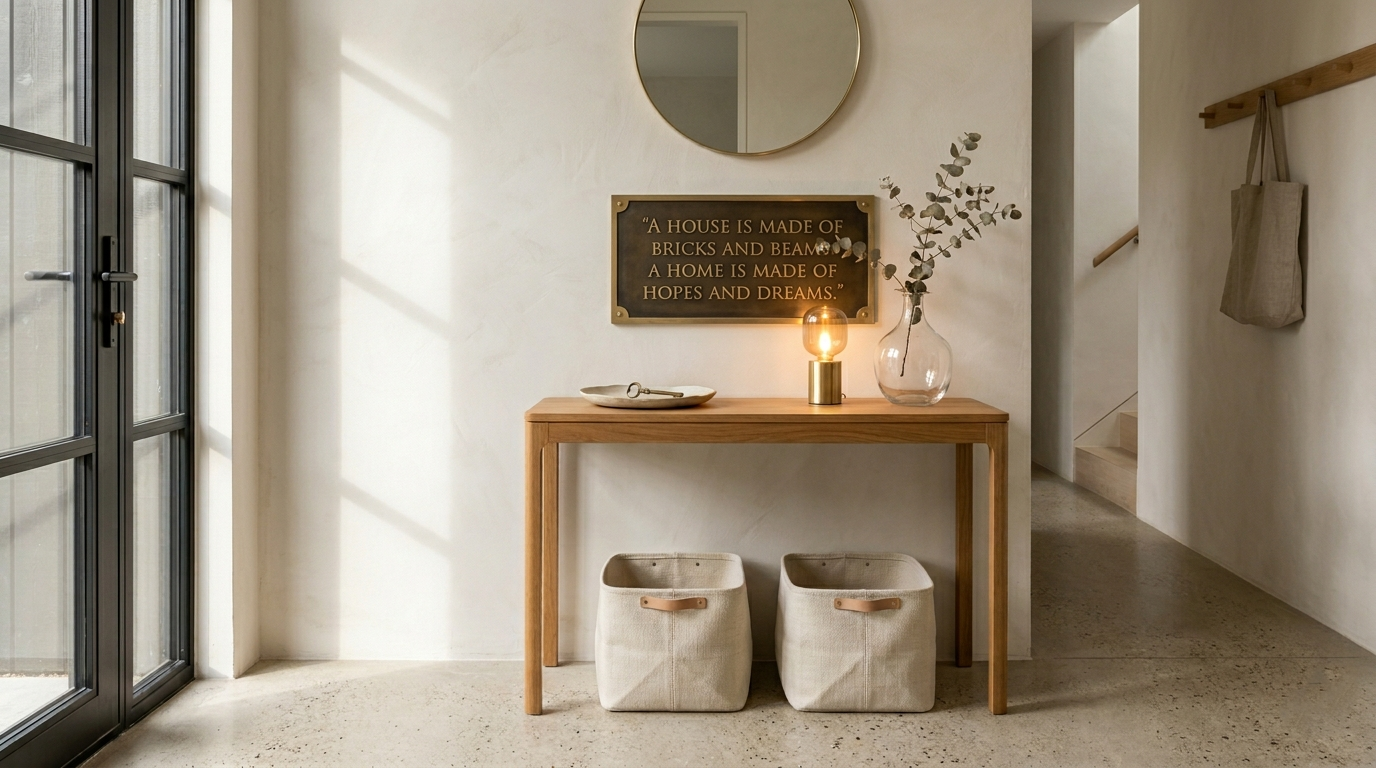

In the fast-paced landscape of modern life, the exact point of transition where the external world ends and the domestic sanctuary begins carries immense psychological weight. Historically, speculative residential architecture treated the front entrance as a mere afterthought—a cramped hallway or a generic open area that immediately dumps guests straight into a living room or kitchen. This spatial failure forces the household to confront immediate visual chaos the moment the front door swings open. When a foyer is treated as a chaotic utility zone cluttered with unmanaged shoes, rattling keys, stray mail, and bulky coats, the home fails to fulfill its ultimate luxury mandate: to serve as a deep emotional anchor of peace and recovery.
To reclaim the spatial power of your home’s arrival sequence in 2026, the elite design vanguard utilizes a sophisticated framework: building an aesthetic entryway foyer through the principles of the “Threshold of Calm.”
When mainstream interior decorating blogs try to offer advice on entryway layouts, their solutions are painfully superficial, generic, and uninspired. They will tell you to hang a cheap row of exposed black metal coat hooks, stick a flimsy wicker basket on the floor for dirty shoes, and lean an oversaturated motivational sign against the wall. This reactive approach creates massive visual clutter, fracturing the home’s sightlines and immediately cheapening the architectural value of the property. It transforms what should be a breathtaking preview of your interior design language into a disorganized retail mudroom.
An authentic luxury entry pavilion achieves impact through structural editing and sensory decompression. By employing completely hidden custom cabinetry, a single monolithic stone console anchor, high-precision architectural lighting, and curated spatial boundaries, you transform a simple entrance into a high-performance, visually quiet gallery. Here is your definitive design manual to mastering this sophisticated art form.
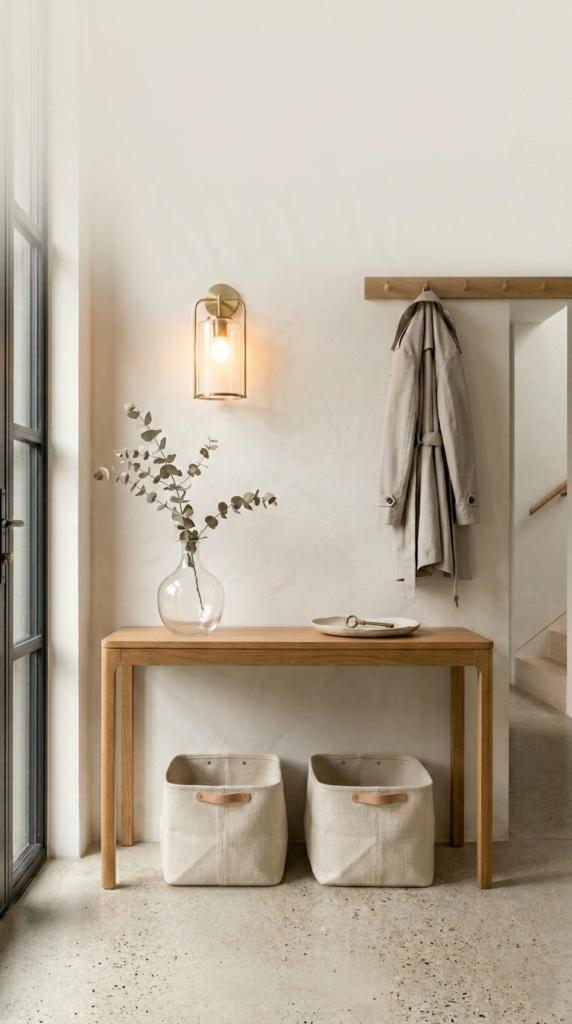
🚪 1. The Principle of Total Concealment: Integrated Cloaking Walls
The foundational rule of an aesthetic entryway foyer is the absolute eradication of visible everyday utility. Keys, dog leashes, heavy winter coats, and muddy boots are functional necessities, but when left out in the open, they instantly broadcast stress and disorganization.
To design a truly upscale entry sequence, wrap the perimeter walls in seamless, custom integrated millwork that completely replaces traditional standalone coat racks. Specify touch-to-open, handle-less slab doors finished in a rich architectural medium—such as a wire-brushed European white oak veneer, a soft tactile matte plaster finish, or a hand-applied micro-cement. Within this hidden structural wall, micro-engineer dedicated storage spaces: internal charging docks for phones, recessed walnut slots for mail sorting, integrated boot-drying ventilation, and hidden pull-out mirrors. By camouflaging your entire storage program behind clean vertical planes, the foyer ceases to feel like a mudroom; it functions as an elegant, minimalist gallery envelope.
🏛️ 2. The Monolithic Anchor: The Sculptural Floating Console
When you strip away the frantic layout noise of exposed racks and baskets, the foyer requires a single, powerful artistic anchor that catches the eye and commands architectural authority without blocking the flow of movement.
Instead of introducing a generic, four-legged wooden table that collects dust underneath, select a custom, wall-mounted floating console slab crafted from a single breathtaking natural stone. Opt for a highly figured geological marvel—such as a honed Arabescato marble with fluid charcoal veins, a rich tactile unfilled travertine, or a striking dark brushed quartzite. Mounting the console directly to the wall framework without visible floor supports creates an extraordinary sense of weightlessness. This floating architecture allows the flooring material to extend uninterrupted underneath, making the foyer footprint feel significantly wider and more expansive while serving as a museum-quality platform for a single sculptural vase or a treasured piece of art.
🪞 3. Reflective Decompression: Oversized Architectural Glass Placement
Foyers are notoriously starved for natural light, often presenting as narrow, windowless tunnels bounded by structural columns. Poorly planned, tight walls can make arrival feel claustrophobic and uninviting.
To manipulate the perception of scale, strategically introduce an oversized architectural mirror as a primary wall element. Rather than hanging a small, generic framed mirror from a wire, specify a massive, floor-to-ceiling custom panel of antiqued, bronze-tinted, or low-iron ultra-clear glass directly integrated into your millwork channels. Position the glass perpendicular to the main entry door so it captures natural light from adjacent rooms or the front transom window, bouncing soft light deep into the dark corners of the entry sequence. The grand scale of integrated glass fractures the physical boundaries of the wall, creating a cinematic depth of field that doubles the perceived size of the foyer.
🎨 4. Textural Continuity: The Unified Flooring Transition
An entryway floor must withstand high-impact foot traffic, moisture, and dirt. However, breaking up the floor with a tiny, cheap welcome mat or an awkward, mismatched tile insert immediately segments the space visually, making the floor layout look choppy, small, and disorganized.
Enforce complete textural continuity across the entire footprint of the arrival zone. Specify an ultra-durable, high-end hard surface that flows seamlessly into the main living areas, such as continuous large-format porcelain slabs, a poured architectural seamless terrazzo, or premium micro-topping. If your home features premium hardwood, carry the exact same timber species, plank width, and stain choice directly to the front door threshold, treating the wood with a high-durability matte commercial sealer. To add a layer of soft quiet luxury underfoot, replace small, colorful accent rugs with a single custom-fitted, low-profile runner woven from undyed premium wool or natural sisal in a tight, architectural geometric weave that matches the exact width of the walkway.
💡 5. Luminescent Directing: Recessed Plaster Channels and Floating Toe-Kicks
In a tight, transitional entry space, poor lighting creates dark pockets that shrink the volume visually, making the ceiling feel low and oppressive. Conversely, a single harsh central light fixture blinds the eyes of arriving guests, throwing intense glares and unflattering downward shadows.
Treat light as a soft, fluid architectural sculpting tool that gently guides you inward. Layer three distinct zones of luminescent decompression. First, router precision channels beneath your floating stone console and embed completely flush, warm-white dimmable LED ribbon light strips (around 2700K to 3000K) to cast an even, shadowless glow down to the floor, making the stone appear to float on a cloud of light. Second, introduce a subtle architectural transition by installing recessed LED strips along the toe-kicks of your cloaking cabinets. Finally, banish generic downlights and install trimless, plastered-in spotlights or a singular minimal, hand-blown glass low-profile wall sconce that pools soft, ambient light exactly where you drop your keys and greet your guests.
💡 The Soul of Arrival: My Final Spatial Note
The true genius of designing an aesthetic entryway foyer with a threshold of calm framework is that it shifts your perspective on your entire residence. It honors the spatial reality that our minds require a physical buffer zone to shed the hectic energy of the outside world before we step into the private sanctuary of our lives. When you choose to wrap a tight arrival footprint in seamless floor-to-ceiling custom millwork, perfectly floating monolithic stone slabs, massive integrated reflective glass, and micro-engineered internal lighting systems, the foyer is transformed. It ceases to be a tight, compromising hallway; it becomes a masterfully edited architectural experience—an exquisite, high-aesthetic sanctuary where the very act of crossing the threshold instantly commands the soul to breathe in absolute, uninterrupted luxury and home.
