


Think about how you typically end your workday. You close your work laptop, walk away from your desk, and almost immediately pull out your phone. For the next few hours, your mind is flooded with text replies, rapid-fire social media feeds, or a high-intensity television series right up until the exact moment you reach out and flip off the bedroom lamp.
We treat sleep like a simple on-off toggle switch. We expect our highly overstimulated brains to instantly crash into deep, restorative rest the second our head hits the mattress.
But our biology doesn’t work that way. When you try to force an instant transition from digital chaos to deep sleep, you end up with chronic nighttime tossing, a racing mind at 2:00 AM, and mornings that leave you feeling exhausted before your feet even touch the floor. Your nervous system needs an off-ramp.
Establishing a firm evening boundary using intentional, beautifully made physical objects provides an immediate signal to your brain that the productive day is officially done. By swapping out digital screens for rich, tactile materials, you can build a reliable evening routine that helps you decompress naturally. Here is a practical, editorial guide to the six evening ritual essentials I rely on to clear out cognitive noise and protect my rest.
1. The Evening Transition Matrix
To reset your evening layout, you need to shift your environment from high-energy utility to soft, indirect sensory layers. Here is how these six physical anchors target your senses to lower your daily stress response before bed.
| Ritual Tool Essential | Core Structural Material | Targeted Sensory Layer | Hidden Design Purpose |
| Hinoki Wood Bath Bridge | Raw Japanese cypress | Smell & Touch (Steam activated) | Creates a dedicated screen-free tub zone |
| Heavyweight Linen Kimono | 100% Washed French flax | Tactile skin contact | Acts as a wearable boundary from work |
| Handleless Ceramic Cup | Hand-thrown weighted clay | Deep thermal grounding | Slows down drinking cadence naturally |
| Botanical Pillow Mist | True amber glass & essential oils | Olfactory memory anchor | Triggers automatic brain down-regulation |
| Solid Brass Book Weight | Polished structural brass | Analog visual focus | Keeps text flat for effortless reading |
| Alabaster Stone Holder | Translucent mineral crystal | Low-altitude light wavelength | Replaces harsh overhead blue-light glare |
2. The 6 Sensory Anchors for Nighttime Decompression
🪵 1. The Solid Hinoki Wood Bath Caddy Bridge
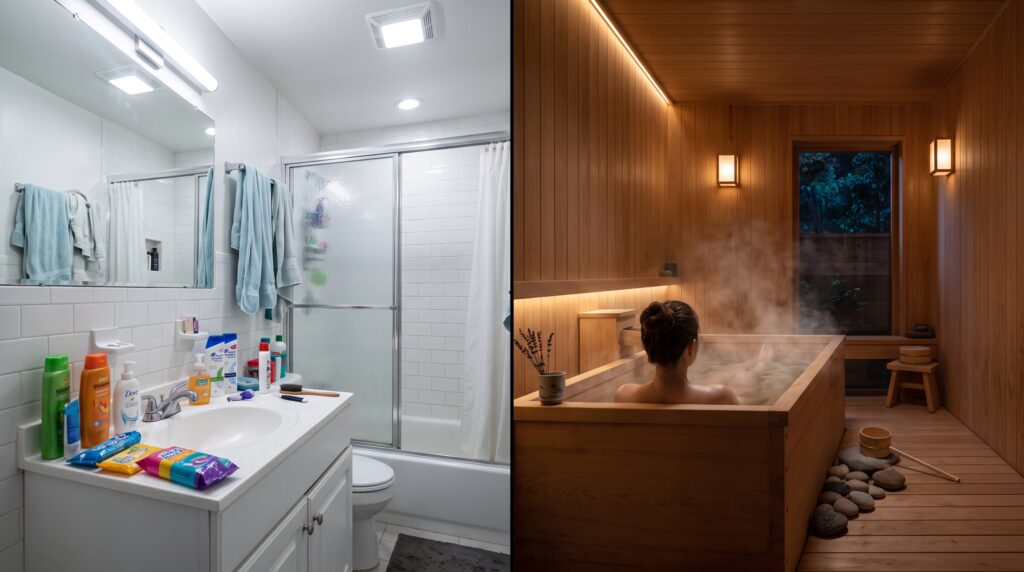
True relaxation requires a physical shift in your environment. Your bathroom shouldn’t feel like a cold, bright, utilitarian box where you rush through quick hygiene; it should function as a quiet home sanctuary. Taking a long, warm bath is a proven physiological tool to lower your baseline blood pressure and release the deep muscle tension that comes from sitting hunched over an office chair all day.
To make this a true ritual, clear out the cluttered plastic shampoo bottles and rest a solid Hinoki wood bridge across the edges of your tub. Hinoki is a premium Japanese cypress wood that releases an incredible, clean scent of dry timber and citrus the exact second it mixes with warm bathroom steam. A minimalist wooden ledge gives you a stable place to set organic bath salts, a cup of hot tea, or a physical book right above the waterline. It keeps your bath completely free from phones or tablets, pinning your attention to natural textures instead.
🌾 2. The Heavyweight Linen Kimono Robe
The clothes you wear change how you hold your body and how your brain categorizes tasks. If you spend your evening lounging in the exact same casual t-shirt or sweatpants you wore while running daytime errands or answering emails from your couch, your brain struggles to separate a state of active readiness from a state of real rest.
Make it a strict rule to change out of your daytime clothes the minute you log off. Stepping into a thick, heavyweight washed linen kimono robe creates an immediate psychological shift. Linen has a distinct, substantial weight and an organic friction against the skin that feels instantly calming. Choosing a robe in a deep, grounded tone like raw flax, charcoal, or sage green changes your physical posture. The loose, open design allows for relaxed breathing, serving as a wearable boundary that tells your mind you are officially off duty.
🍵 3. The Matte Ceramic Weighted Teacup (Without Handles)
Sipping a hot, caffeine-free herbal infusion like chamomile, valerian root, or passionflower is a classic way to wind down. But if you’re drinking it fast while staring down at a bright screen, you miss the entire point of the exercise.
Try upgrading your evening drinkware to a heavy, hand-thrown ceramic cup designed completely without a handle. When a cup lacks a handle, you have to wrap both palms entirely around the warm stoneware base just to lift it. This simple physical contact serves as an excellent grounding tool, heating your hands and pulling your focus straight into the present moment. The intentional weight of the clay and the soft, non-reflective matte finish slow your movements down, turning an ordinary drink into a slow, satisfying hand-warming meditation.
🧴 4. The French Lavender & Cedarwood Silk Pillow Mist
Your sense of smell connects directly to your brain’s limbic system, which controls emotions and sleep regulation. By pairing a specific, incredibly clean botanical scent exclusively with your bedding, you can build a powerful environmental trigger for sleep.
Before you get ready for bed, lightly mist your sheets and linen pillowcases with an all-natural essential oil blend of French lavender, cedarwood, and deep vetiver. Make sure to stay completely away from cheap, synthetic aerosol room sprays, which release harsh chemicals and artificial musks that can trigger nighttime headaches. Look for a plant-based mist bottled in heavy amber glass. Within a few days of doing this consistently, your brain builds an automatic olfactory connection: the second you catch that specific wood-and-herb profile, your nervous system knows it is completely safe to slow down and rest.
📖 5. The Brass Book Weight for Analogue Reading
Reading an e-reader or a tablet screen in bed floods your eyes with artificial blue light, which actively stops melatonin production and tricks your brain into thinking it’s still noon. Reclaiming your peace means returning to the quiet, completely analog world of real paper pages.
To make reading in bed an effortless luxury, keep a solid, polished brass book weight right on your nightstand. Engineered as a heavy geometric bar or a simple open hoop, this weighty metal tool sits straight across the face of a paperback or hardcover book, keeping the pages flat against your blanket without requiring you to constantly grip the paper with your thumbs. It lets your hands relax completely, turning your reading hour into a smooth, fluid, and genuinely peaceful transition away from your daily thoughts.
🕯️ 6. The Solid Alabaster Stone Tealight Holder
The final, and most crucial, step in resetting your evening routine is shutting down harsh overhead lighting. Bright, white LED bulbs stop your natural sleep hormones from releasing, keeping your brain trapped in an artificial state of midday alertness.
Keep your evening lighting setups simple: every single light source should live below eye level. Flip off the wall switches and light a single pure beeswax tealight protected inside a solid, hand-carved alabaster stone holder. Alabaster is a translucent, milky-white natural crystal. When a flame burns inside it, the stone filters the glare, casting an incredibly soft, warm golden glow across the room that mimics a dying campfire. The gentle flicker of a low-profile flame throws soft, relaxing shadows across the walls, setting the perfect, quiet atmosphere for an uninterrupted night of deep sleep.
3. Protecting the Nighttime Boundary
Ultimately, an effective evening routine isn’t about buying a collection of luxury products; it’s about using intentional tools to defend your attention from digital noise.
Treat the final hours of your day as a sacred window. Put the screens away, let the lights drop low, and give your body the slow, sensory transition it needs to rest, recover, and rebuild for the day ahead.
