
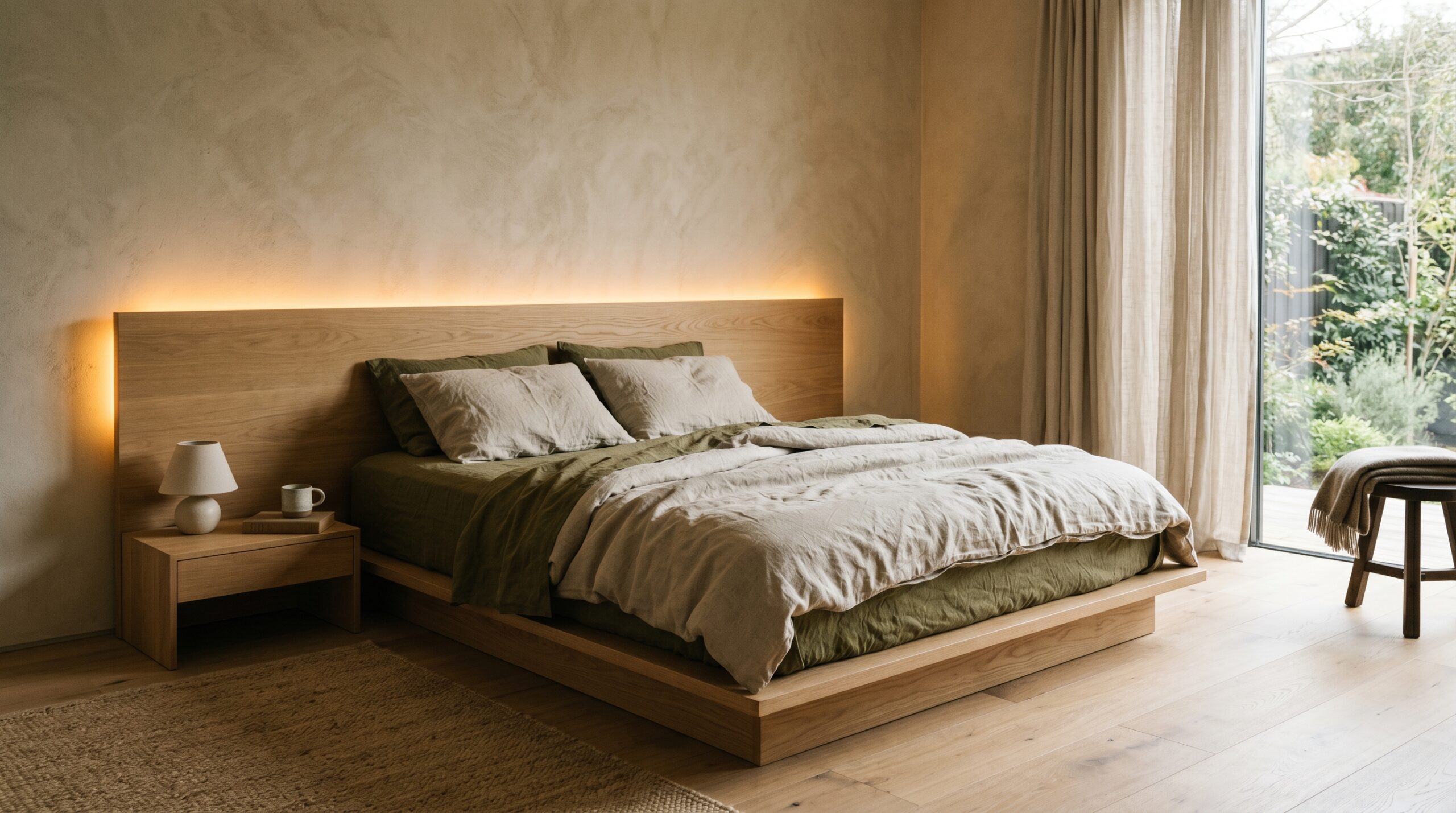

The modern bedroom has quietly undergone a regressive architectural transformation. What was historically designated as a sacred place of absolute rest has systematically transformed into a digital workspace and high-stimulation entertainment hub. With charging cables snaking up the nightstand, smart televisions glowing in standby mode, and the ambient hum of connected devices, our sleep environments are saturated with invisible friction.
When your neurological system is exposed to persistent micro-stimuli up until the exact moment you close your eyes, genuine physiological recovery is compromised. To protect your sleep architecture and restore your working memory, you must treat bedroom design through the lens of neuro-architecture. By intentionally engineering a low-stimulus bedroom environment, you construct a physical firewall against cognitive fatigue.
1. The Neuro-Architecture of Sleep: Why Visual Silence Matters
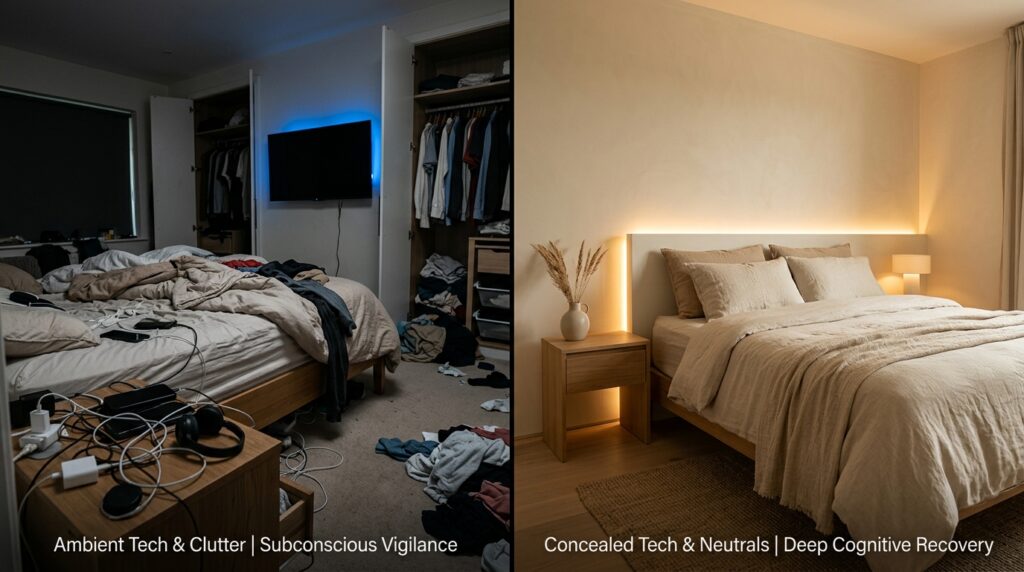
From an evolutionary standpoint, the human brain evaluates an environment for safety, predictability, and stability before allowing the nervous system to transition into deep, restorative sleep cycles. High visual noise—such as cluttered surfaces, open wardrobes, exposed technology, and contrasting color palettes—is interpreted by the subconscious mind as unresolved environmental data.
When your eyes sweep a room filled with visual clutter before turning off the lights, your brain’s default mode network (DMN) continues to process those environmental inputs in a low-level alert state. This micro-vigilance directly delays your descent into deep delta-wave sleep, leaving you feeling cognitively depleted upon waking.
To achieve true visual silence, a low-stimulus bedroom demands a strict philosophy of absolute concealment. Wardrobes should feature flush, handle-less doors that blend seamlessly into architectural walls, minimizing shadows and breaking lines. Nightstands must be curated down to a single functional item, such as a ceramic carafe or a physical book.
By stripping away the visual triggers of daytime obligations, you signal to your nervous system that the day’s processing requirements have officially concluded. This structural reduction of environmental stimuli serves as a profound psychological reset button. When your eyes are no longer darting from one unresolved visual clutter point to another, your brain waves naturally shift from high-frequency beta states into calmer alpha and theta patterns, setting the stage for unfragmented sleep.
2. Managing the Light Spectrum: Hertz, Lumens, and Melatonin
The human circadian rhythm is acutely sensitive to light wavelengths and color temperatures. Exposure to artificial blue light—emitted by smartphones, tablets, laptops, and standard cool-white LED overhead bulbs—suppresses melatonin production for hours after exposure, tricking the suprachiasmatic nucleus into believing it is still midday. However, optimizing a low-stimulus bedroom requires managing more than just your phone screen; it requires a systematic overhaul of your entire spatial lighting ecosystem.
Eliminate Secondary Standby Glows
Even minor points of light, such as the red standby dot on a television, the blue light of an air purifier, or the green charging indicator on a power strip, can penetrate closed human eyelids. This ambient light disruption limits the depth of your REM cycles.
Implement a strict zero-tolerance policy for exposed electronic indicators by utilizing woven cable management boxes or black-out tape over mandatory appliance lights. Every electronic device left exposed acts as a sensory anchor, subtly pulling your brain back into an active, alert state.
Lower the Color Temperature and Lux Levels
Overhead ambient lighting should be avoided entirely during the two hours leading up to sleep. Instead, rely on low-level, indirect architectural lighting situated below eye level, such as flush baseboard wash lights or heavily shaded warm-toned bedside lamps. Ensure all bulbs in the sanctuary space are specified at 2200K to 2700K (Kelvin) and operate at low lux levels. This warm, amber glow mimics the natural spectrum of sunset, triggering the natural release of melatonin.
Invest in True Architectural Blackout Solutions
Streetlamps, passing car headlights, and early morning sunlight can cause subtle micro-awakenings that disrupt sleep continuity. High-end low-stimulus spaces utilize automated, recessed track blackout drapes or floor-to-ceiling heavy linen drapery paired with dense acoustic linings. This combination seals the perimeter of your windows, blocking both external light leaks and environmental noise.
3. The Physics of Acoustic Isolation and Textural Comfort
Engineering physical stillness within a bedroom requires a foundational understanding of internal acoustics and wave mechanics. Sound waves bounce aggressively off hard, unbroken, reflective surfaces, creating micro-echoes and elongated reverberation times that keep the nervous system alert. The hum of an air conditioner, the distant rumble of traffic, or the structural vibration of home appliances can become trapped in a poorly calibrated room.
To cultivate an authentic atmosphere of quiet luxury and physical calm, prioritize high-density, unrefined organic textiles and acoustic dampening materials:
| Material Type | Design Application | Neurological & Acoustic Benefit |
| Pure Flax Linen | Bedding & Layered Drapery | Maximizes airflow, regulates core temperature, and absorbs high-frequency sound. |
| Raw Lime Plaster | Wall Finishes & Ceilings | Diffuses light reflections smoothly and eliminates harsh room echo. |
| High-Density Wool | Floor Rugs & Acoustic Panels | Absorbs low-frequency structural vibrations and dampens impact noise. |
| Oiled White Oak | Platform Beds & Framing | Establishes a grounding tactile connection to nature, reducing cortisol. |
Treating bedroom walls with lime plaster, micro-cement, or ultra-matte mineral paints softens light diffusion, making the boundaries of the room feel soft, protective, and insulated. Rather than reflecting a sound wave cleanly back into the room, these porous, matte materials break the wave apart, instantly softening the audio profile of the space.
Furthermore, swapping out synthetic carpeting or cold porcelain tile for raw, oiled timber floors or dense organic wool rugs creates a grounding physical boundary the moment you step into the room. This structural muting creates an immediate, palpable sense of shelter the moment you step across the threshold.
4. Implementing the Digital Firewall: Practical Execution
Transforming your bedroom into an elite low-stimulus sanctuary requires a systematic, practical decoupling of technology from your resting space. This shift can be executed efficiently through a few deliberate updates:
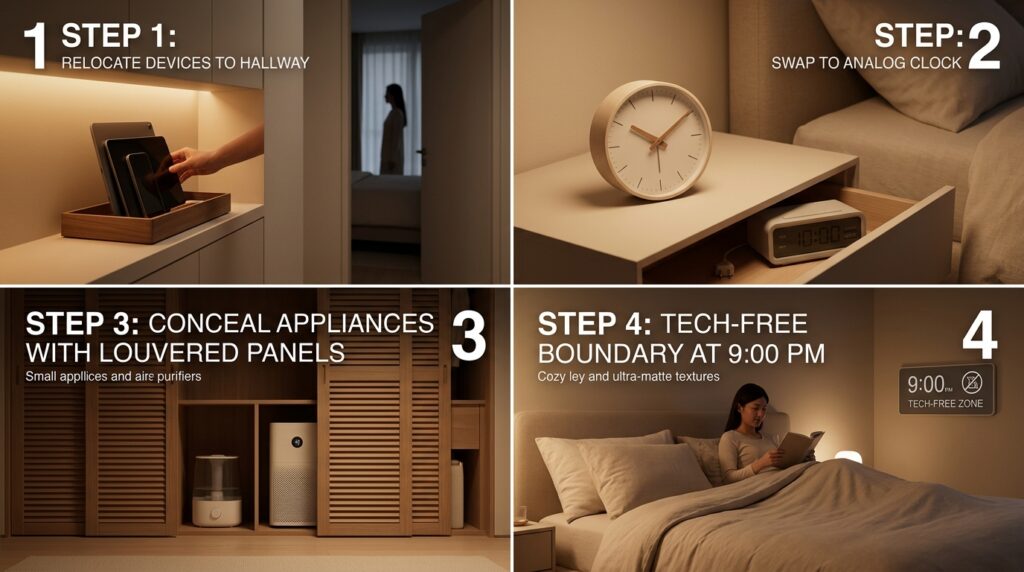
First, establish a dedicated charging station entirely outside the bedroom—such as in a hallway niche or home office. The bedroom should be a screen-free zone; your phone does not cross the threshold past 9:00 PM. Replace your smartphone alarm with a solid, analog brass or wood clock that features no digital display, cellular connectivity, or active backlighting.
Second, if electronic devices like humidifiers or air purifiers are structurally necessary, ensure they are physically hidden within louvered panels or set behind low-profile room dividers that diffuse their operational noise and cover any digital screens.
Ultimate luxury is not defined by excess, opulence, or constant connectivity; it is defined by complete control over your personal environment. By mastering the neuro-architecture of low-stimulus bedroom design, you transform your bedroom from a simple place of residence into a highly sophisticated asset engineered for mental longevity, creative clarity, and profound emotional restoration.
